


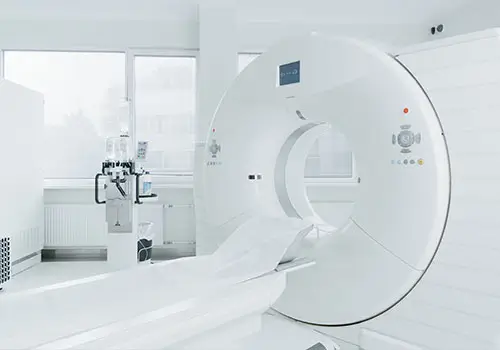
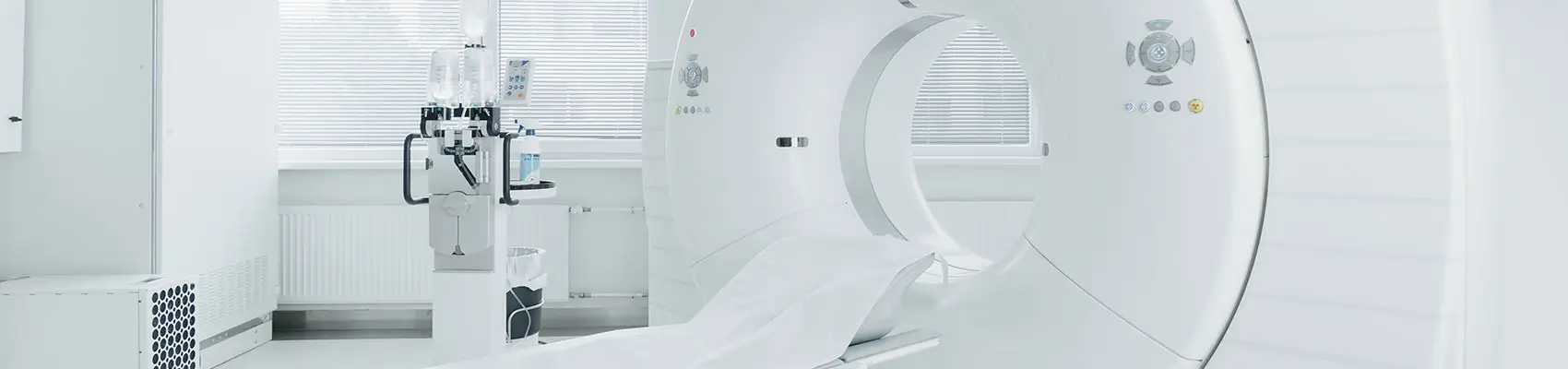
Computed tomography (CT) is a diagnostic imaging technique that allows every part of the body to be examined, producing extremely detailed images.
It is a radiological examination in which the data collected as various X-ray beams pass through the area of interest are processed by a computer to reconstruct a three-dimensional image.
With this service, TAH Veterinary Clinic thus becomes one of the first centres in Switzerland.
How is a veterinary CT scan performed?
The X-ray tube, which emits X-rays, rotates around the patient, who lies on a table that moves horizontally through a circular opening. Sometimes, to obtain better images of the blood supply (arterial and venous) to organs and tissues, an iodine-based contrast agent is used and injected intravenously.
What are some of the most common indications?
In Oncology, for tumour staging, performing CT-guided biopsies and planning complex surgical procedures. In patients with multiple traumatic injuries, for example following road accidents or falls from heights, to assess the condition of the skeleton, brain, and thoracic and abdominal organs. In Orthopaedics, to investigate various forms of hip, shoulder and elbow dysplasia, complex fractures and facial trauma. In Neurology, to investigate intracranial and spinal conditions (spinal trauma, herniated discs, inflammatory diseases). To increase diagnostic sensitivity for thoracic and abdominal conditions that are difficult to diagnose using other diagnostic tools, such as lung lobe torsion, ectopic ureter and portosystemic shunt. To examine the nasal cavities and frontal sinuses, the retrobulbar space, and the middle and inner ear.
What are the contraindications in dogs and cats?
Since CT uses X-rays, the examination is contraindicated during pregnancy and in patients allergic to the contrast agent.
The use of the contrast agent must be carefully evaluated in patients affected by diseases that impair the function of organs such as the kidneys or liver (diabetes, kidney failure, liver failure).
How should you prepare for this examination?
In Veterinary Medicine, CT examinations are performed under general anaesthesia, except in particular cases, not only to immobilise the patient but also to obtain images of optimal diagnostic quality. For this reason, and to allow administration of the contrast agent, the patient must have undergone complete blood tests.
Furthermore, it is important that the patient has fasted for at least 8 hours (during the period before the examination, drinking water and taking regular medications are permitted, as they do not interfere with the correct performance of the examination).
How is the examination carried out and how long does it take?
A few days before the scheduled examination, a consultation with the radiologist will take place so that the exact reason for the examination is understood and the examination protocol can be optimised. To this end, all the patient’s clinical and diagnostic documentation is collected (medical records, diagnostic examinations, results of specialist consultations), together with the prescription for the examination requested by your attending veterinarian.
It is important at this stage to report any previous episodes of allergic reactions (seasonal, food-related or medication-related).
All examinations are performed as day-case procedures to ensure post-anaesthetic monitoring and patient safety.
The duration of the examination varies depending on the anatomical region and the suspected diagnosis, and overall takes between 10 and 20 minutes. Throughout the entire procedure, your pet’s vital functions will be continuously monitored by the dedicated team of anaesthetists.
Once the diagnostic examination is completed, barring complications, the patient is discharged, can return home and immediately resume normal activities.
Food and water should be given according to the instructions of the responsible anaesthetist.
How can you book an appointment?
Appointments are arranged directly with the radiologist in charge by calling +41 (0)91 225 3765. When requesting an appointment, it is advisable to have the prescription from your attending veterinarian available.
Dr. Paolo Martegani (holder of a second-level Master’s degree in Canine and Feline Ultrasonography) is responsible for the department and coordinates its diagnostic activities.


