


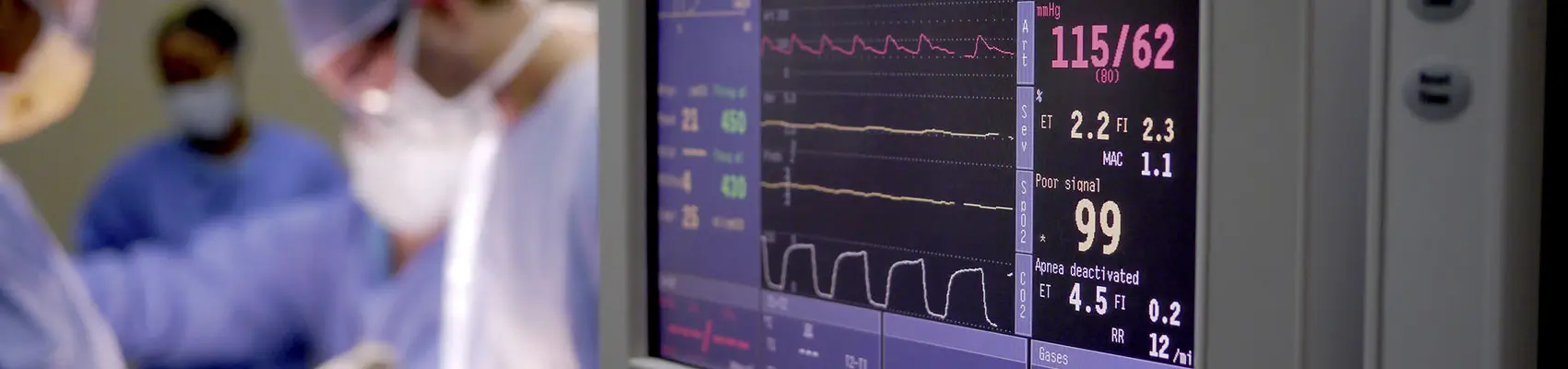
The main task of the anaesthetist is to monitor and support the patient’s vital functions at every stage of the procedure. To do this, we use modern equipment such as multiparameter monitors, mechanical ventilators and infusion pumps, which allow the safe management of patients under anaesthesia.
General anaesthesia, or narcosis, is used during many surgical procedures. Through the administration of drugs by the anaesthetist, the patient loses consciousness, a condition comparable to an induced and reversible coma. The anaesthetist’s work is complex and demanding because the quantity of drugs administered must be determined according to the patient’s health condition, age, weight, sex, the presence of chronic diseases or other risk factors.
The anaesthetist’s role is essential because they are responsible for the patient’s life and safety throughout the surgical procedure and must constantly monitor vital parameters such as breathing, blood pressure, heart rate, body temperature and blood oxygen levels.
Our operating theatres provide personalised intraoperative anaesthetic management: depending on the surgical procedure and the characteristics and needs of each patient, different types of anaesthesia are administered, including inhalational, intravenous or locoregional anaesthesia.
The anaesthetist’s work does not end with the surgical procedure but continues in the inpatient care unit, monitoring the patient’s recovery from anaesthesia and improving their comfort through analgesic protocols suited to their clinical condition.
The department’s staff are available every day of the week, by appointment, for a preoperative anaesthetic consultation.
The Anaesthetic Consultation
The preoperative anaesthetic consultation is of fundamental importance in assessing the health condition of a patient who is to undergo surgery.
Sometimes underestimated by patients, who prefer to have numerous consultations with the surgeon who will perform the operation, this consultation is increasingly proving to be a safeguard in minimising the risks of surgery. During the consultation with the anaesthetist, the owner’s fears, expectations and doubts are discussed, but above all, diseases, allergies, metabolic and anatomical conditions that could increase the likelihood of complications in the operating theatre are identified.
A general assessment through blood tests and instrumental examinations, supplemented by further investigations where necessary, makes it possible to approach surgery with much greater peace of mind. It is advisable to schedule this consultation at least two weeks before surgery, so that any additional examinations can be requested and ongoing drug treatments can be discontinued or modified if necessary.
HOW LONG DOES IT TAKE FOR GENERAL ANAESTHESIA TO WEAR OFF?
Anaesthetic drugs are eliminated from the body within a few hours after surgery, so the time required to resume normal activities depends more closely on the type of procedure performed. Generally, the anaesthetist plans the doses of anaesthetic drugs so that their effects last a few hours longer than the expected duration of the procedure. However, if necessary, their effects can be prolonged through additional administration without any interruption in their effectiveness.
Can I choose the type of anaesthesia?
You can certainly discuss any concerns and preferences with the anaesthetist, but the final decision rests with the veterinarian, who will assess factors such as the type of surgical procedure, the patient’s current and previous health conditions, and the presence of risk factors.
CAN FOOD OR WATER BE GIVEN BEFORE ANAESTHESIA?
All anaesthetic procedures in veterinary medicine require fasting from the day before the examination. Following the administration of anaesthesia, reflexes are slowed or inhibited. If food is present in the stomach, it may rise through the oesophagus and, in the worst case, enter the lungs, causing a severe form of pneumonia.
Drinking is permitted until a few hours beforehand.
WHY CAN’T THE PATIENT DRINK IMMEDIATELY AFTER GENERAL ANAESTHESIA?
Because the muscles of the digestive tract may not yet have recovered their function, with a risk of aspiration of liquids if they are swallowed.
SHOULD I CONTINUE ADMINISTERING PRESCRIBED MEDICATIONS?
All medications routinely administered must be reported during the anaesthetic consultation. At that time, the anaesthetist will assess which medications, if any, should be discontinued or replaced. Any changes to the usual treatment must be agreed with the anaesthetist.
WILL MY PET EXPERIENCE PAIN AFTER SURGERY?
Any surgical procedure can cause pain, but in recent years particular attention has been paid to patient well-being. The anaesthetist and surgeon will do everything possible to minimise discomfort in the days following surgery through the administration of effective pain-relieving medications and minimally invasive surgical techniques.
WILL MY PET EXPERIENCE NAUSEA AFTER SURGERY?
Nausea and, in some cases, vomiting are among the most common side effects of general anaesthesia, but they are expected to disappear within a few hours at most and can, if necessary, be treated with specific medications.
ARE LONGER PROCEDURES ALSO MORE DANGEROUS?
Not necessarily. In fact, numerous factors come into play, and among the most important are:
- the patient’s health condition and the possible presence of chronic diseases
- the anaesthetist’s competence and experience
- the type of surgical procedure


